Research

Research

Tracing interaction, governance, and policy effects through digital evidence.

One study follows public interaction across nationwide government social media; the other evaluates how urban governance policies reshape the business environment.

Conference Paper · First Author

Government Expression & Public Interaction on Social Media

Using 328,544 posts from 337 verified government Weibo accounts, this study combines NLP, machine learning, and panel-data methods to examine how government communication strategies relate to public interaction.

Key findings

Readability is the most consistently positive content characteristic. Media richness mainly shows an immediate positive relationship, while agenda volatility displays a more context-sensitive positive association. Emotional intensity does not show a stable direct positive effect. The analysis further examines policy context and heterogeneity across regions and account types.

337Verified accounts
328,544Original posts
3,617Account-month observations
First AuthorResearch role
Computational Social ScienceNLPMachine LearningPanel DataDigital Governance

Methods & data

  • Natural Language Processing
  • Supervised Text Classification
  • Machine Learning
  • Two-way Fixed Effects
  • Panel Data
  • Heterogeneity Analysis

Conference Presentation

Chinese Sociological Association Annual Conference 2026

Xi'an, China · July 2026

The paper was selected for a thematic forum on social transformation in the digital-intelligence era and presented in Xi'an through a written talk and poster session.

Working Paper · Collaborative Research · Submitted to Chinese Public Administration · Under external review

Can City Branding Improve the Business Environment?

This faculty-collaborative study uses a 2004–2021 panel of prefecture-level cities and the National Sanitary City designation as a quasi-natural experiment to examine how city brand building and governance interventions affect the business environment. The manuscript has been submitted to Chinese Public Administration and is currently under external review.

Main findings & mechanisms

National Sanitary City designation is associated with a significant improvement in the urban business environment, with the core result remaining consistent across three measures. The mechanism analysis points to environmental governance and urban sanitation, employment absorption and service-sector clustering, and the expansion of producer- and digital-service employment. Effects also vary across administrative rank, location, city-cluster status, and prior governance conditions.

My Contribution

My primary responsibilities in this collaborative project include data construction, empirical analysis, and manuscript drafting. I assembled and harmonized multi-source city-level data for 2004–2021, constructed three measures of the urban business environment, participated in the design of the identification framework, and carried out the principal models, tests, figures, and interpretation.

Data Construction

  • Integrated multi-source city-level data for 2004–2021
  • Cleaned data, matched cities, and constructed variables
  • Produced 5,177 city-year observations
  • Constructed three measures of the urban business environment

Empirical Analysis

  • Participated in designing the identification framework
  • Implemented staggered DID, CSDID, and IPW-DID
  • Conducted instrumental-variable, Heckman, and concurrent-policy analyses
  • Conducted mechanism, bootstrap, placebo, Fisher randomization, and heterogeneity analyses

Writing & Presentation

  • Organized the principal regression results
  • Prepared the main empirical tables and figures
  • Drafted the interpretation of empirical results
  • Wrote substantial portions of the manuscript
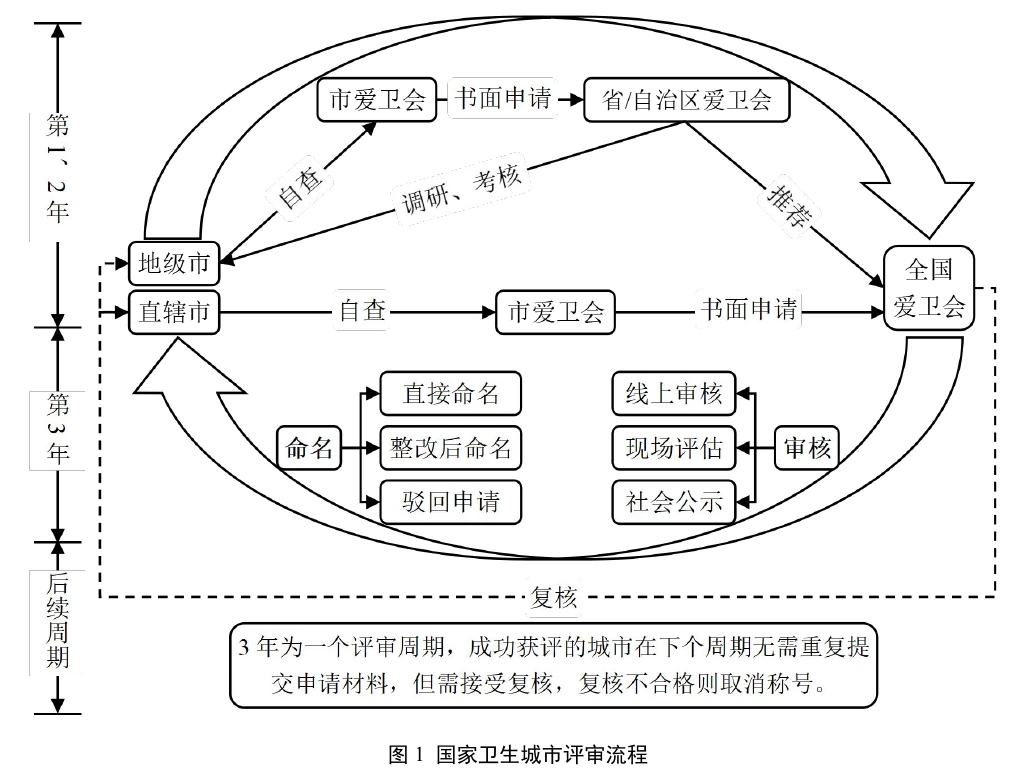
National Sanitary City evaluation process diagram from the paper
National Sanitary City evaluation process · Figure 1
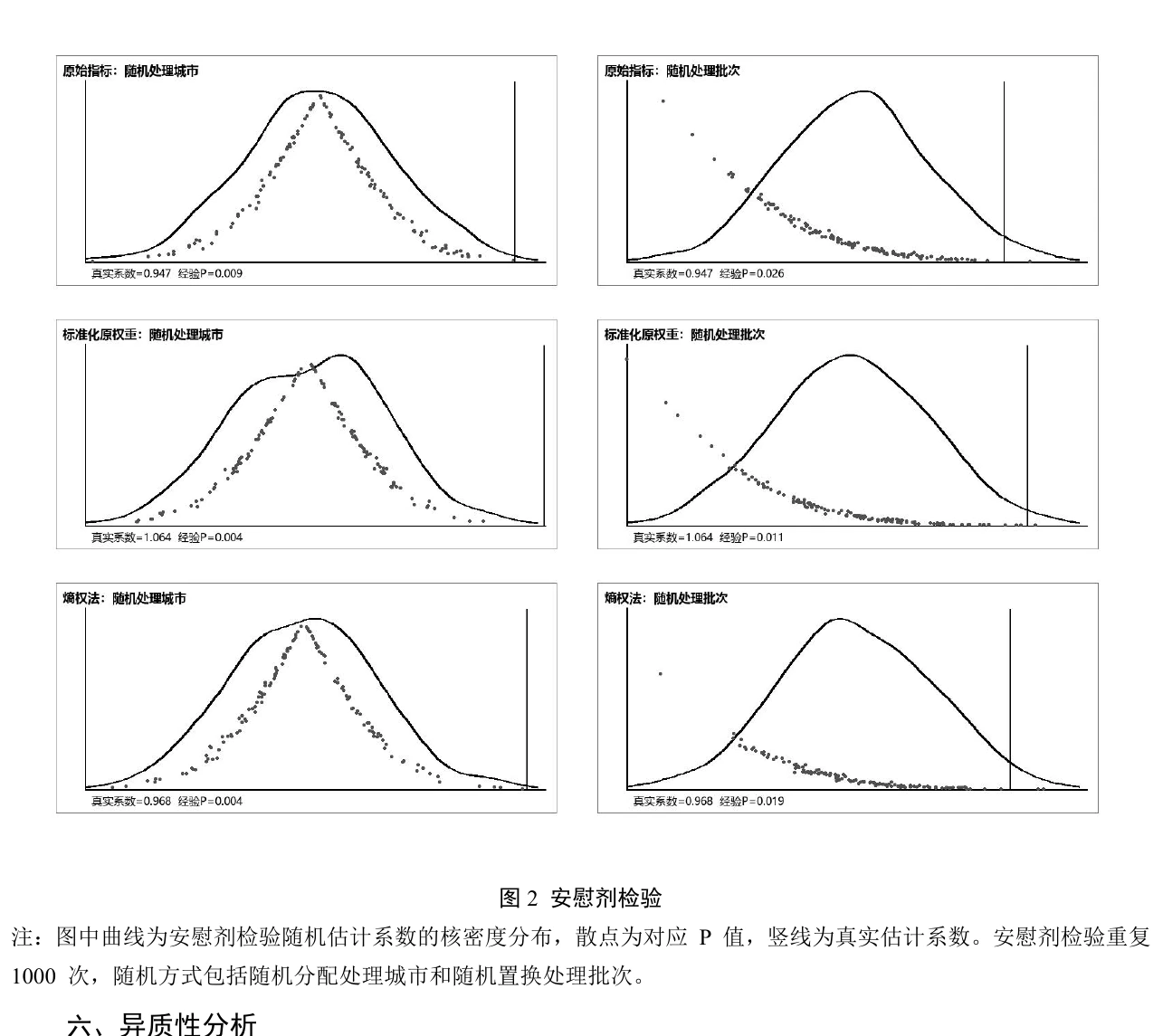
Six placebo-test density and p-value distributions from the paper
1,000-permutation placebo tests · Figure 2
2004–2021Study period
5,177City-year observations
Under reviewCurrent status
CollaborativeResearch setting
Policy EvaluationStaggered DIDCSDIDCausal InferenceUrban Governance
Identification & robustness

  • Staggered difference-in-differences (staggered DID)
  • CSDID
  • IPW-DID
  • Province-by-year Fixed Effects
  • Concurrent-policy Controls
  • Instrumental Variables
  • Heckman Selection
  • Mechanism Analysis
  • Bootstrap Mechanism Tests
  • Placebo Tests
  • Fisher Randomization Tests
  • Heterogeneity Analysis